OctaneStudio+ 2027 Launches with Greyscalegorilla x KitBash3D and more!
Topics: OctaneRender, Company News
Nov. 26, 2026 (2 hours)
LOS ANGELES, CA – November 26th, 2026
The future of rendering is here – and it’s neural. The OctaneStudio+ 2027 Black Friday bundle is back, better than ever. For just €16.65 / month (annual licenses only), OctaneStudio+ 2027 features a full-year subscription to Greyscalegorilla x KitBash3D Essentials, plus €50 in OTOY Studio credits for neural and cloud rendering workflows with tools from World Labs, Meshy, Beeble VFX, BytePlus, FAL, ElevenLabs, Hugging Face and many more.
OctaneStudio+ 2027 subscriptions also include network rendering on up to 10 render nodes by default (more on request), with no GPU limit per machine, plus MoI 3D, Sculptron and Vectron, and OTOY’s Academy Award-winning LightStage MetaFaces and MetaBody scans. Black Friday subscribers also get offers from Cascadeur, World Creator, LWCAD for Cinema 4D and Machina Infinitum.
OctaneStudio+ 2027 launches today with the public release of Octane 2027.1 and a first look at the Octane 2028 roadmap.
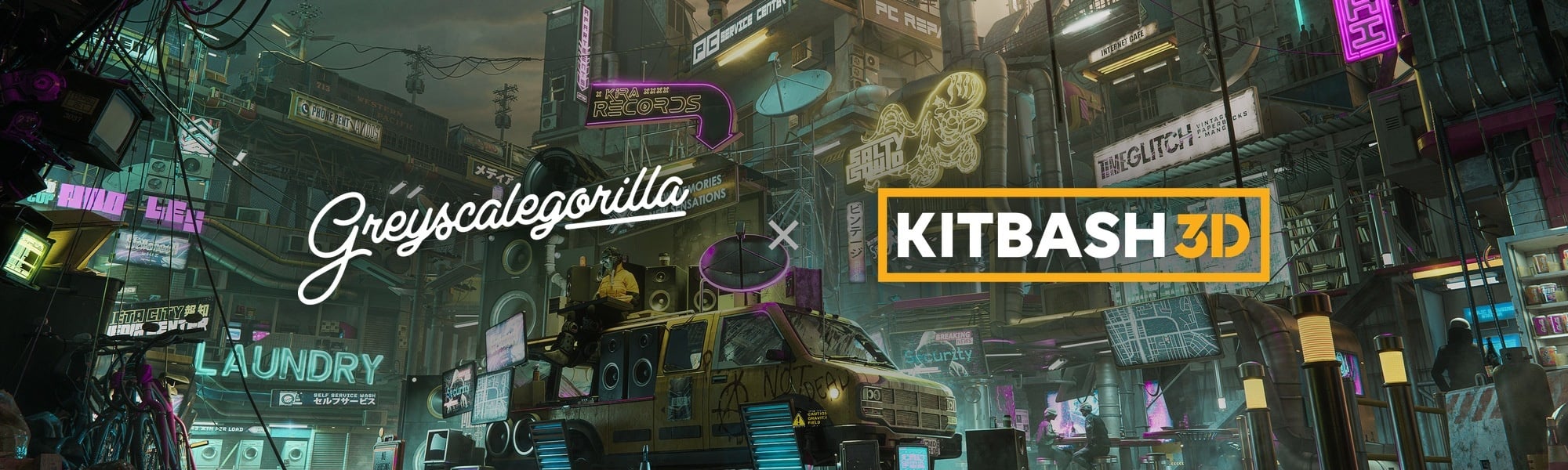
Greyscalegorilla x KitBash3D Essentials
OTOY’s Black Friday bundle offers OctaneStudio+ artists a year of Greyscalegorilla x KitBash3D Essentials: 73 products across models, materials, HDRIs, textures and Cinema 4D plugins, all delivered through Cargo. (Limited time offer, redeemable until January 31, 2027 via coupon code, limit one per OTOY account. More info.)

New for Black Friday, the Render Network now supports Greyscalegorilla’s Cinema 4D plugins natively, including HDRI Link, GorillaCam, Light Kit, Signal, Snoot, Social Frame and Align Tools. Scenes that use them can be rendered on the Render Network, and its Cinema 4D wizard no longer flags them as unsupported (Cinema 4D 2027 and later).
OTOY Studio Portal and MCP Tools
All Black Friday annual subscriptions include €50 in OTOY Studio credits for next-generation neural rendering workflows on OTOY Studio or the OTOY Studio MCP interface.
Edit and build 3D models, Gaussian splats, custom MCP VFX toolchains or bespoke Hugging Face spaces all in one place.
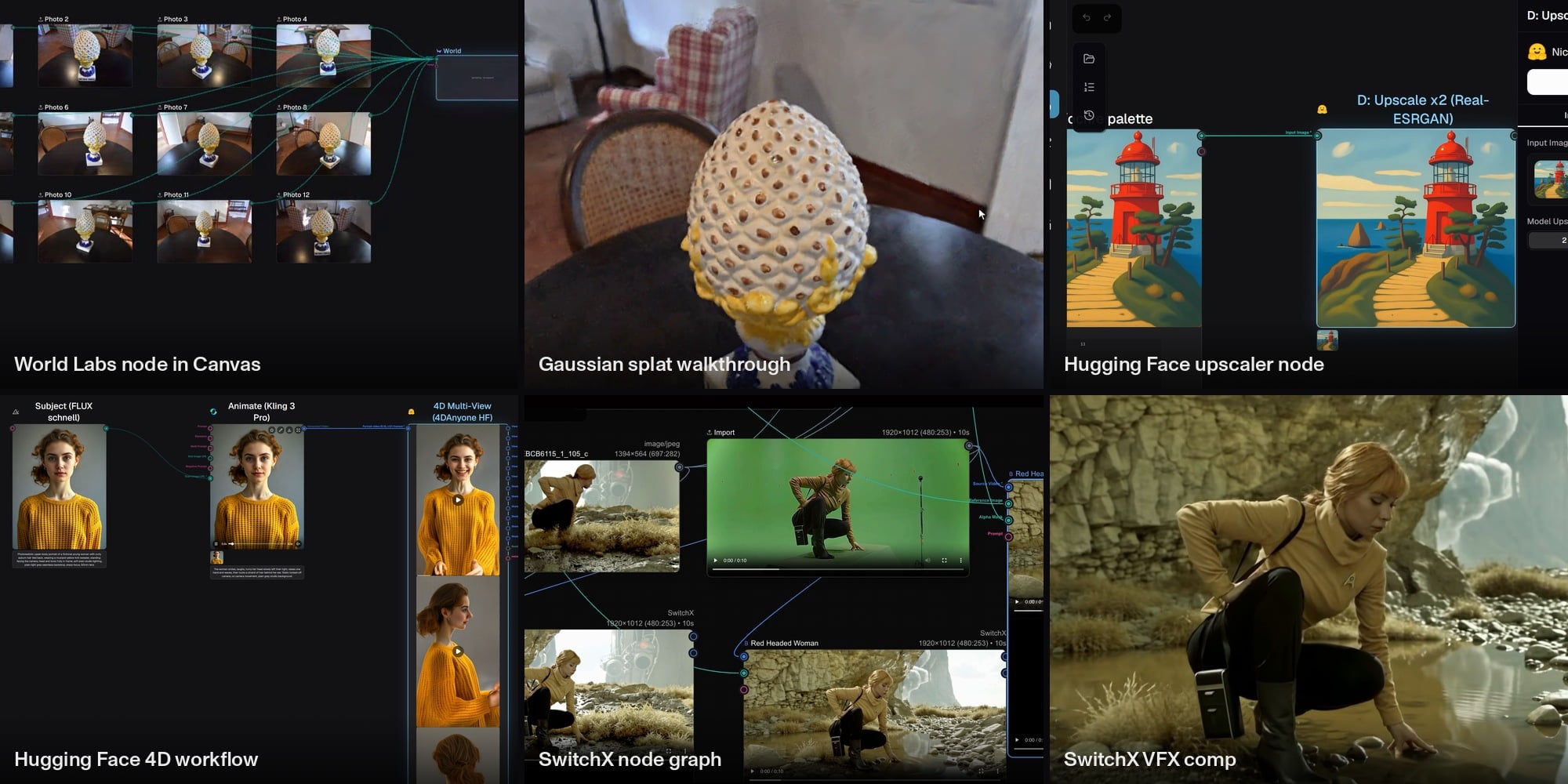
Powered by the latest media and world models from World Labs, Meshy, Beeble VFX, BytePlus, FAL, ElevenLabs, Kling, LTX, MiniMax H3, Decart and many more. (Redeem your coupon code by February 1, 2027; the credits can be used for one year from redemption.)
Cascadeur
The first 65 OTOY Black Friday subscribers to redeem get a full year of Cascadeur Indie, the breakthrough AI-driven animation and physics system for creating physically accurate animations for games and movies without motion capture. All other Black Friday subscribers get discount codes for Cascadeur Indie and Pro: 45% off during Nekki’s Black Friday sale, then 30% off after it ends, through January 7, 2027.
World Creator
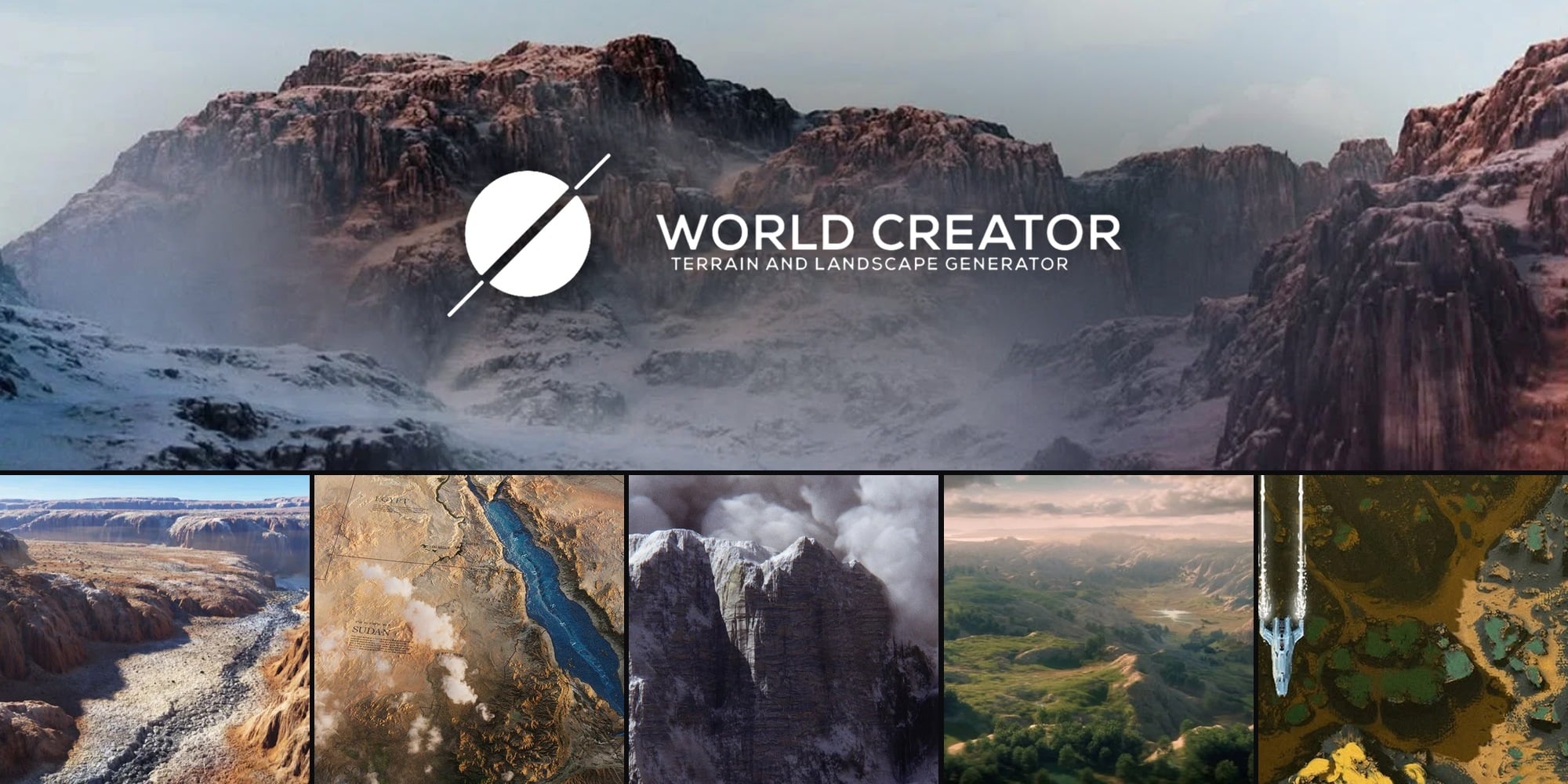
Black Friday subscribers will get 30% off full Individual licenses to the latest version of the incredible GPU-powered terrain and landscape generator. Best of all, the discount stacks on top of any sale pricing already offered on bitethebytes.com, making this the best price on World Creator 4 all year. (Redeem your coupon on bitethebytes.com by January 31, 2027.)
MoI 3D
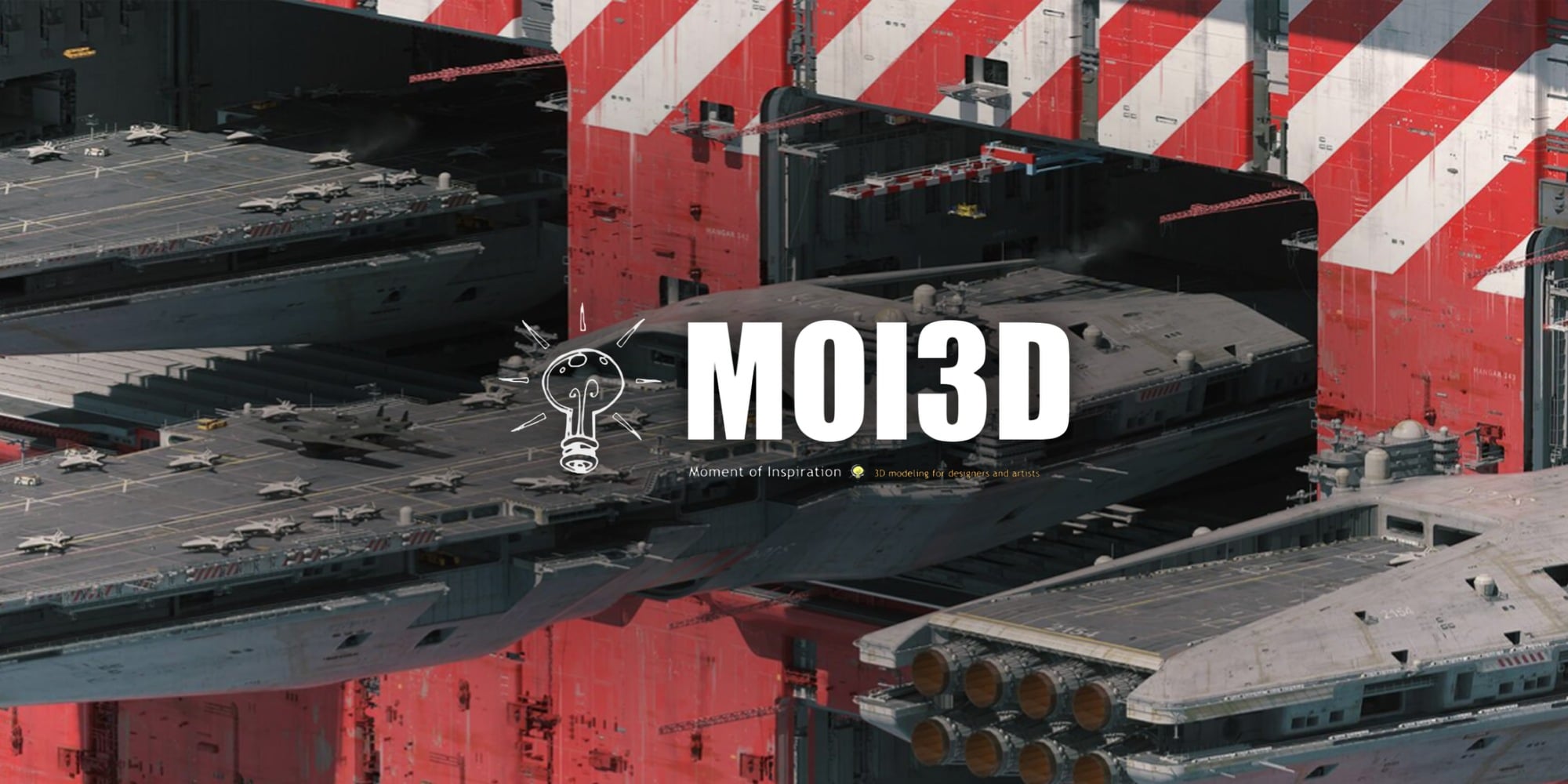
The industry’s leading intuitive, hard surface 3D modeling software, used in conjunction with Octane for years – is included with all subscriptions, with improved integration in Octane 2027.
LWCAD for Cinema 4D
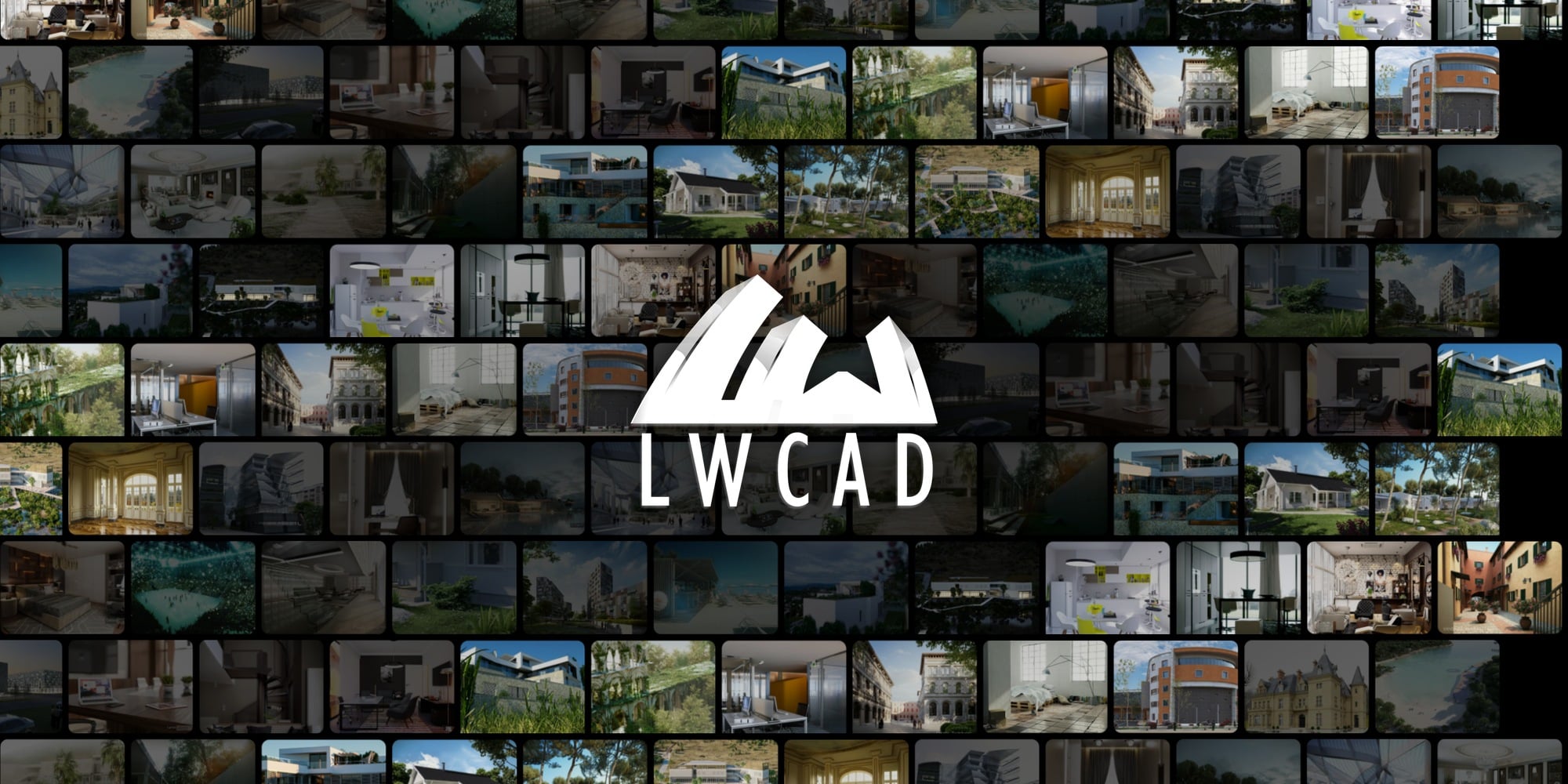
Black Friday subscribers receive €100 off a perpetual license for LWCAD for Cinema 4D (AKA Architron), the polygonal, NURBS and Boolean modeling tool for advanced interiors, exteriors and architectural visualization. (Redeem your coupon on the LWCAD website by January 31, 2027.)
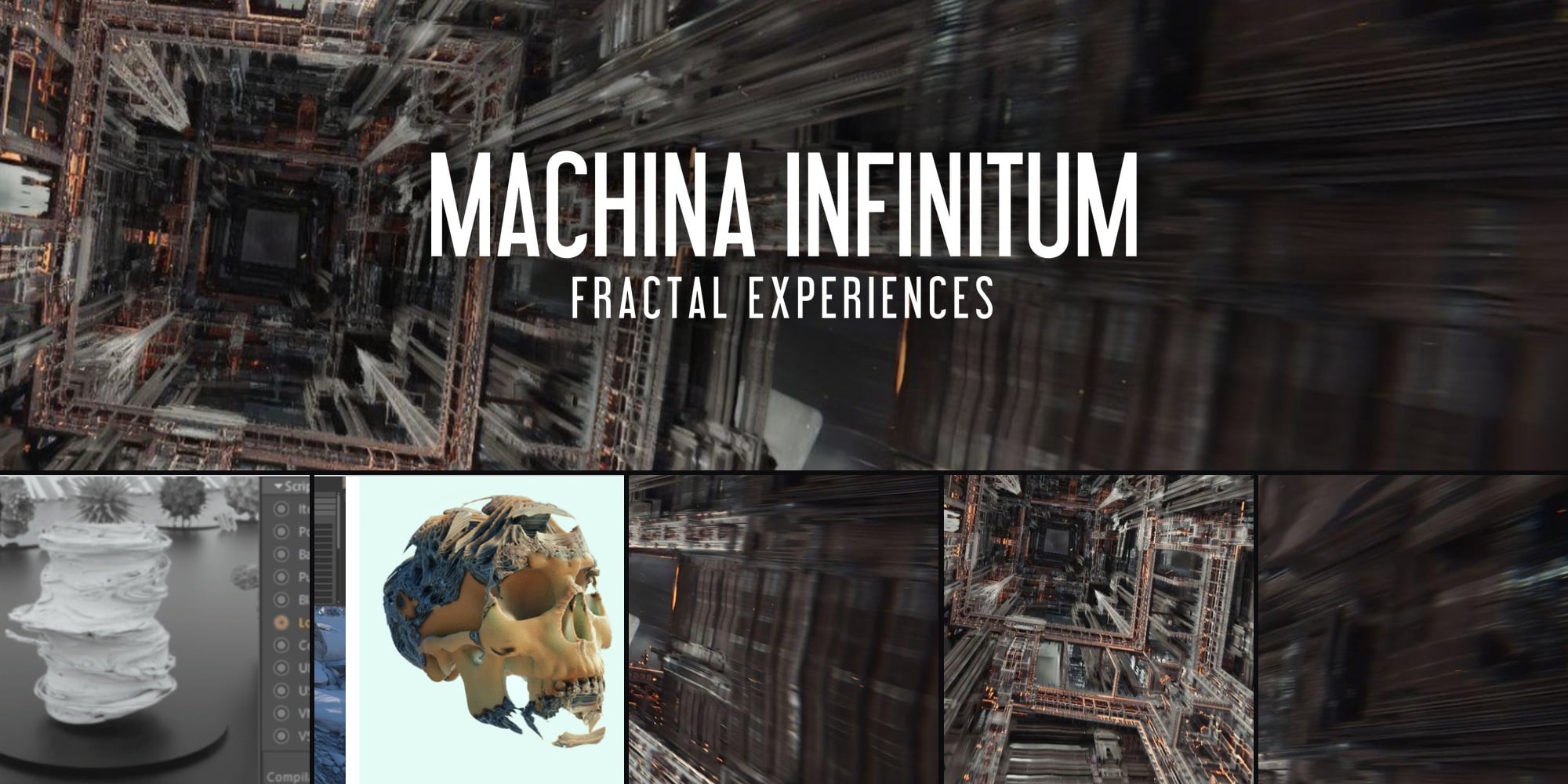
Vectron Ultimate VFX Bundle from Machina-Infinitum
Vectron fractal tools and formulas by Machina Infinitum for procedural worlds, abstract shapes, looping animations and surreal environments. Black Friday subscribers can download every Machina Infinitum pack until January 31, 2027: Vectron Packs 1 to 4, Vectron Tools, Vectron Boole and Octane Camera FX, plus the new Blender Fractals, C4D Audio Reactive Toolkit, C4D Gamepad Camera and the new C4D OSL Mesher, which also works with Octane Vectron.
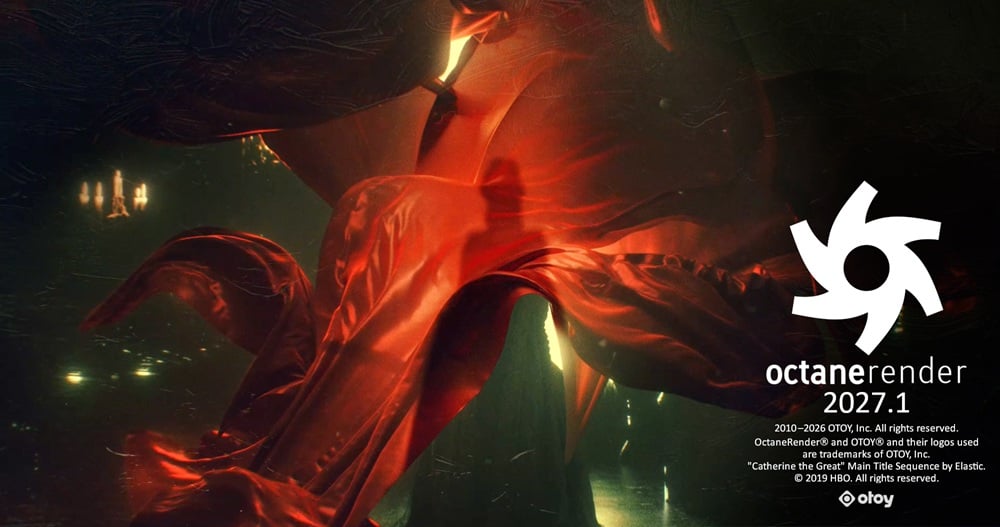
Octane 2027.1 brings real-time neural rendering to the viewport, a Physical Optics material for wave-optics effects, an agentic MCP server that lets AI assistants build and render scenes, and much faster Gaussian splats and volumes.
What’s new in Octane 2027.1:
Real-Time Neural Rendering
Octane 2027.1 replaces the previous real-time mode on select GPUs with real-time neural rendering, built on Octane’s neural radiance cache with OTOY’s latest work to date on Ray Reconstruction. It delivers near noise-free interactive rendering at very low sample counts, even in complex lighting, without compromising Octane’s spectral path tracing or requiring specific scene setups. Dedicated guidance for reflective and refractive surfaces gives realistic glass, little flicker in GI and specular reflections, and stable frames during motion. It works in Standalone and natively across DCC plugins on supported GPUs, renders Gaussian splats, and works with the new environment map visibility cache. Expanded GPU support is coming soon (see the Octane 2028 preview below).
Physical Optics Material
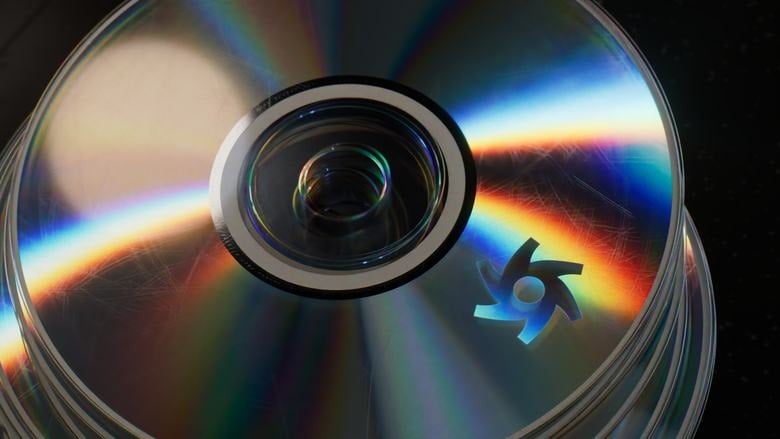
The new Physical Optics material renders wave-optics surface effects: diffraction from microscopic gratings such as the tracks of a CD, thin-film interference on soap bubbles, oil films and coated optics, and birefringence in stressed plastics. Polarization is carried through light bounces, and polarization filters on the Realistic, Thin and Universal cameras reveal it, the way a polarizer does on a real lens.

MaterialX, OpenPBR and Retro-Reflectivity
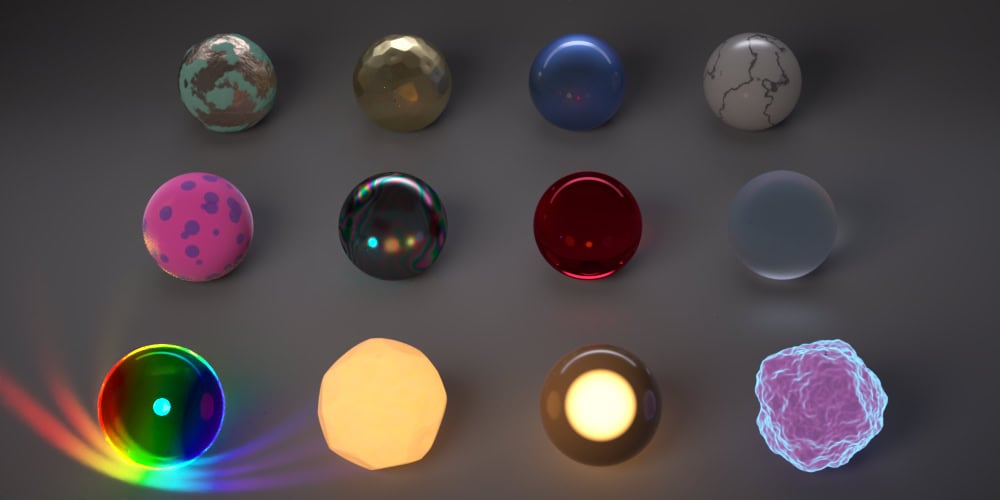
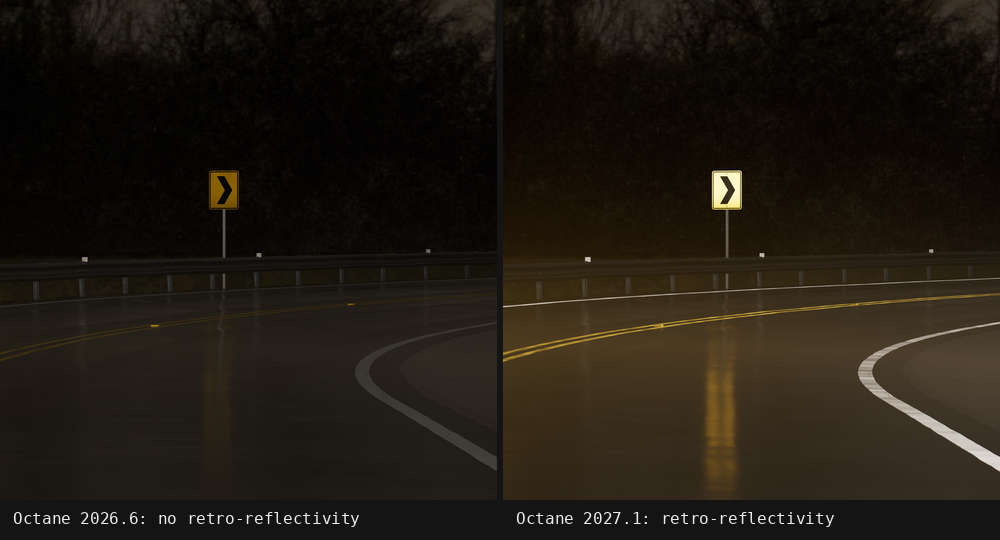
Native MaterialX PBR nodes let artists build custom layered materials, mixed and layered in any order, authored in Octane or imported from MaterialX and USD files. Preliminary OpenPBR 1.2 support adds specular haze, emission weight and retro-reflectivity, and a new retro-reflective model sends light back toward its source, as on road signs, road markings and safety gear.
AI Light 2.0
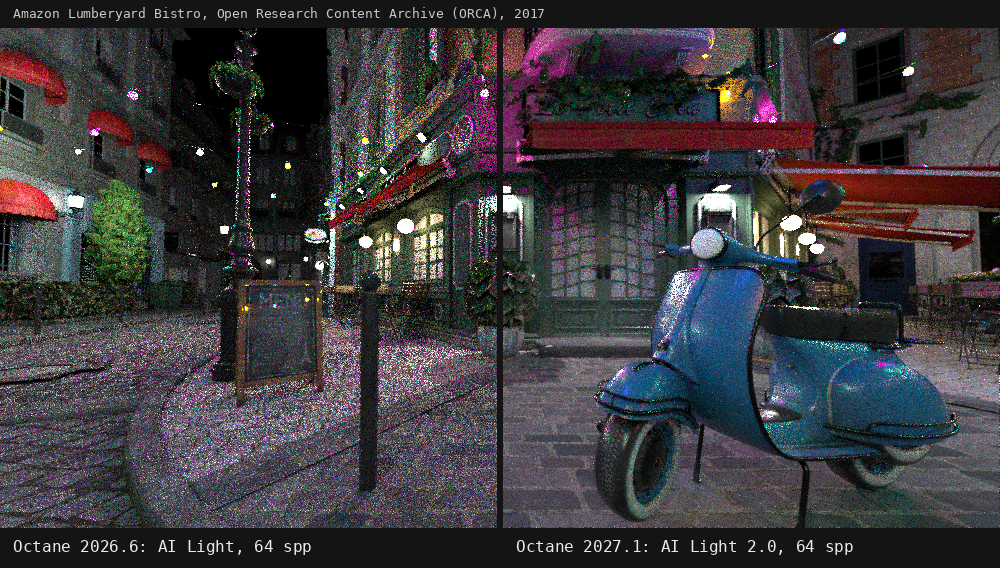
AI Light 2.0 is a new hierarchical many-light sampling method. It uses full spatial and directional information for every emissive primitive to sample the emitters that contribute most, giving more accurate results with much less noise. It is faster than the previous AI Light and scales better to large numbers of light instances.

Faster Gaussian Splats
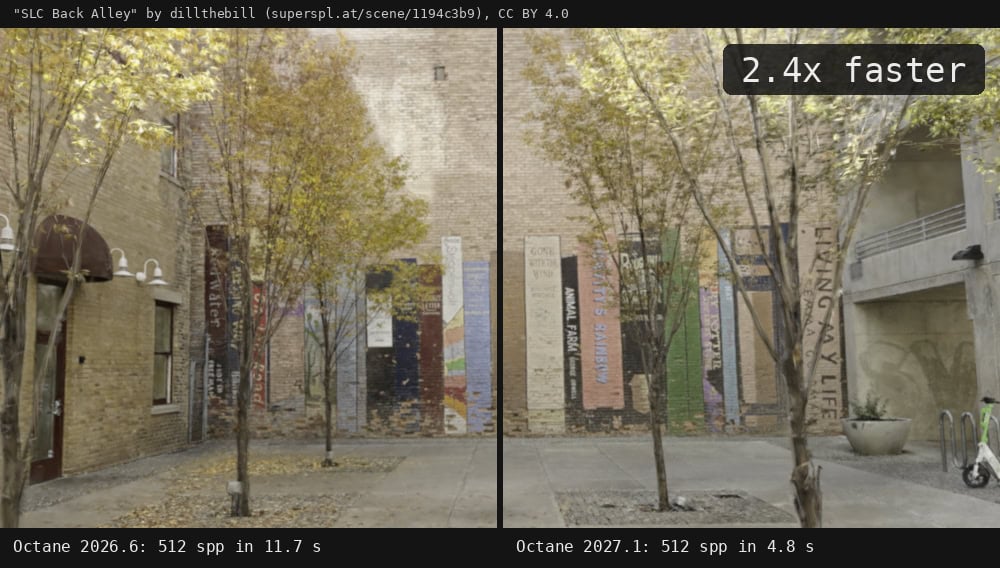
Gaussian splats render much faster in 2027.1: in OTOY’s lab tests, throughput rose 1.2x to 2.5x on Windows and Linux and 1.9x to 3.8x on macOS. Splats also import from glTF files through the KHR_gaussian_splatting extension, and the Gaussian splat node gains transform and color space pins.
Faster Volumes
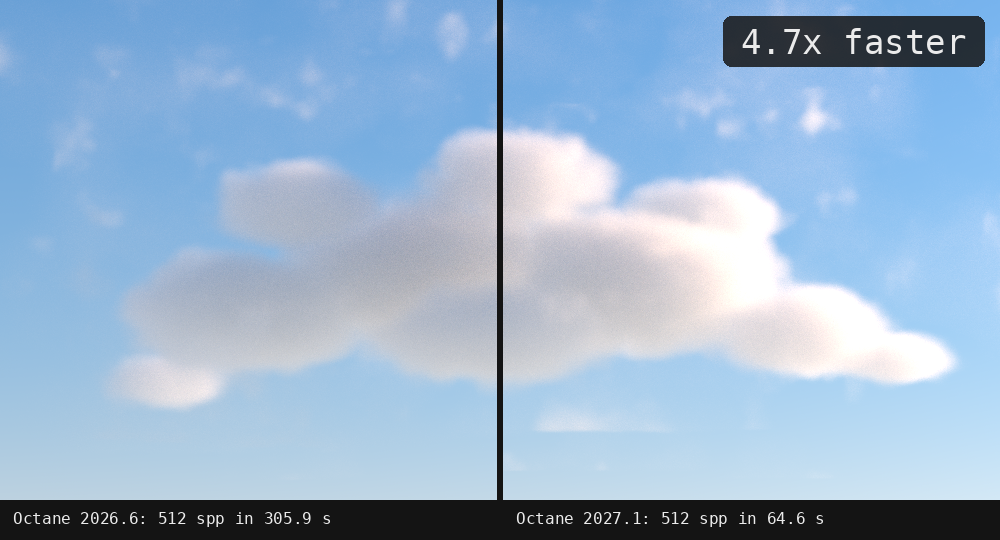
Volumetric rendering now uses an improved method to sample participating media, which is more efficient in many volumetric scenes, particularly low-density and sparse volumes. Compared with Octane 2026, OTOY’s benchmarks on Windows and Linux show a median speed-up of around 1.7x, and up to around 5x in dense, highly scattering volumes. On macOS, performance is on par with 2026, with up to 1.3x faster renders in the scenes that benefit most.
Agentic MCP Server
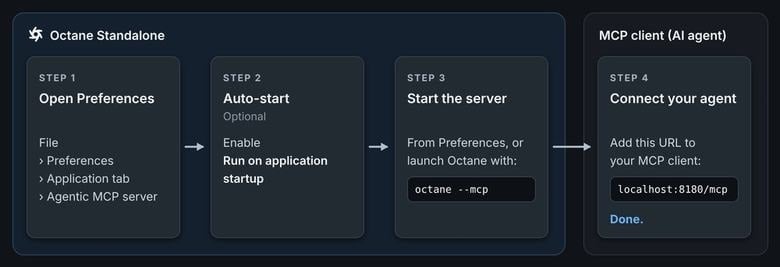
Octane Standalone now includes a built-in Model Context Protocol (MCP) server. MCP-compatible AI agents such as Claude Code, Cursor or VS Code can connect to it to build, inspect and edit scenes, create and wire nodes, set up materials, lighting and cameras, render, and save the results. It accepts local connections only, and runs on Windows, Linux and macOS.
glTF 2.0
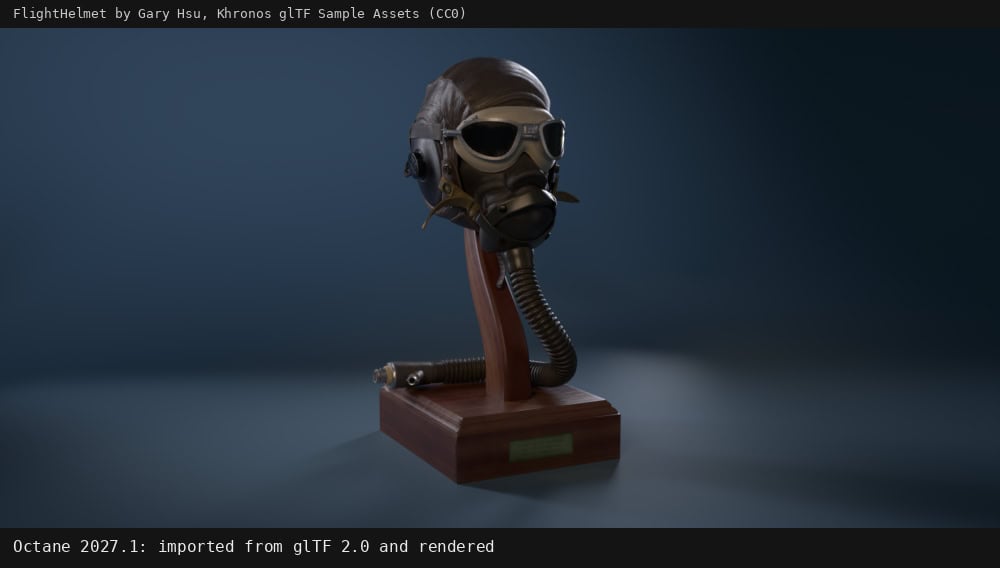
Initial glTF 2.0 import brings assets straight into Octane, with materials as OpenPBR and Gaussian splats through the KHR_gaussian_splatting extension.
Geometry and Pipeline
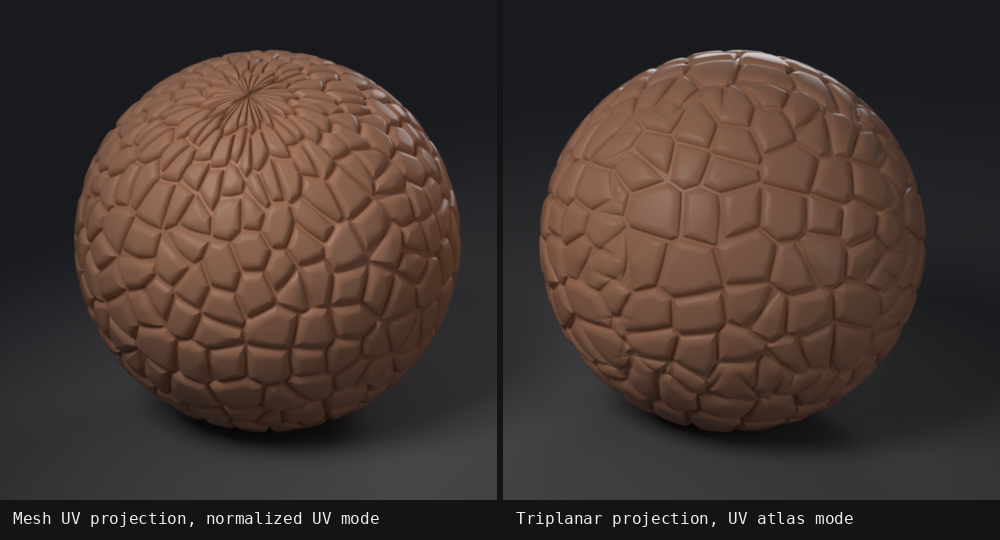
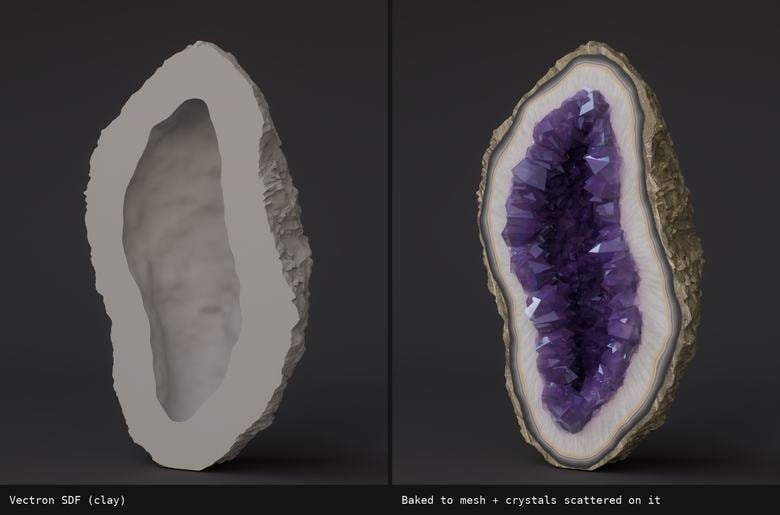
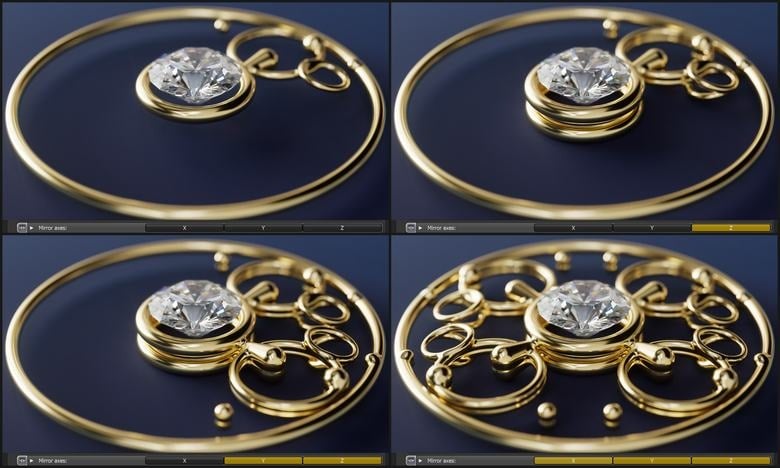
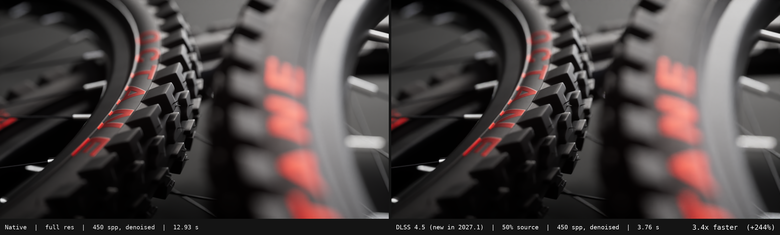
High quality texture displacement now works with any texture projection, Vectron SDFs can be baked to meshes for scattering and simulation, Vectron’s Clip and Mirror operators work on several axes at once, and each denoiser and upsampler gets its own node.
OTOY is proud to share a first look at the features currently in active development for Octane 2028 (now in closed beta):
8D Relightable Gaussian Splat Rendering
Octane 2028 introduces a new workflow to render a scene or captured media as a relightable 8D Gaussian splat, bringing the visual quality of spectral path tracing to production-ready, relightable Gaussian splat assets.
OTOY Studio now supports dozens of GS splat tools for converting videos and images into 4DGS splats, with automated relightable ‘8DGS’ conversion in active development for Octane 2028.
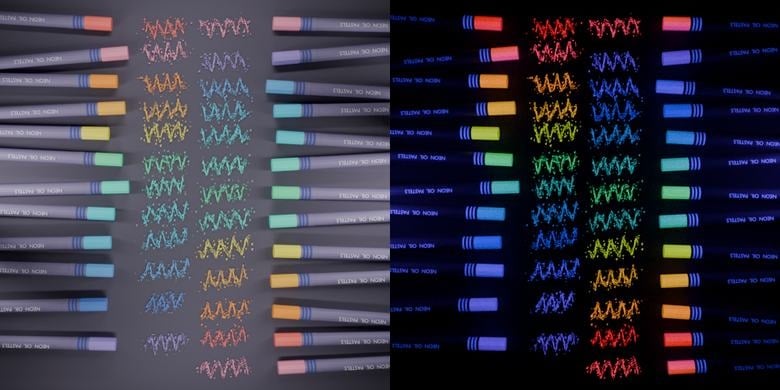
Fluorescence
Multi-lobe fluorescence built on Octane’s spectral rendering. Each lobe has its own excitation and emission spectrum, so materials absorb UV light and re-emit visible color, and the same object can glow differently under different UV sources.
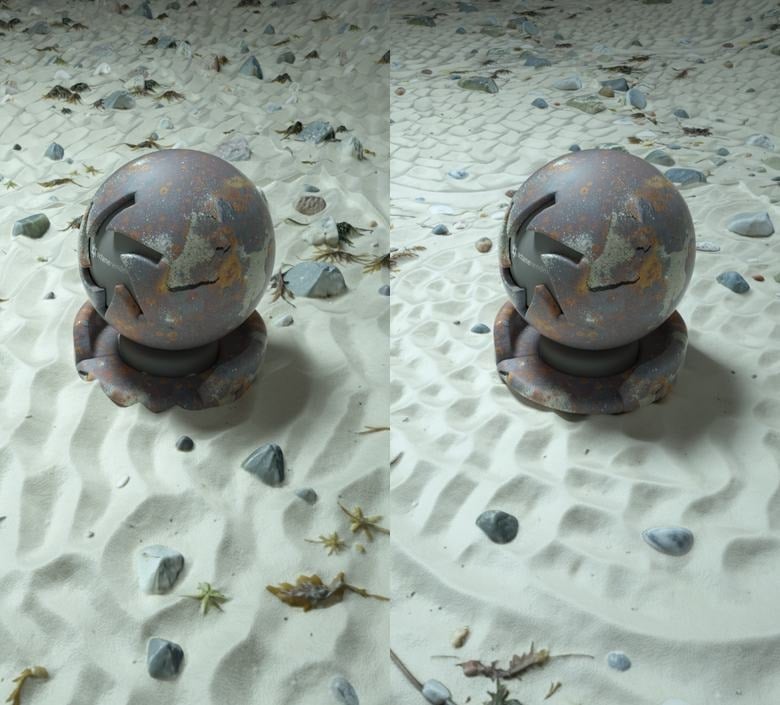
Glint material
A new glint material for the tiny, intense highlights of glittering minerals, sparkling snow, metallic paint and decorative coatings. Individual glints emerge and fade as the camera or the light moves.
Neural PBR materials
Generate PBR materials from a text prompt, locally on your machine. A fast local model creates base materials up to 8K for free, in under 2 seconds at 1K on an RTX 4090, with no internet connection needed beyond downloading the weights. Neural PBR materials, first previewed last year, are being re-factored into an even more powerful set of tools shipping the Octane 2028 release cycle based on user feedback and testing over the last 6 months.
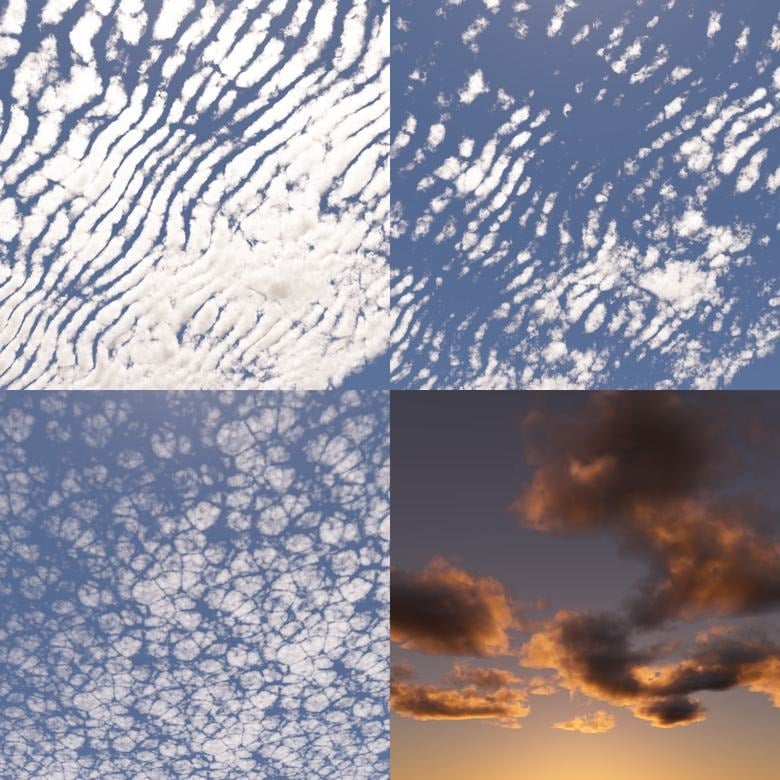
Procedural clouds
Procedural cloud rendering built into the Daylight environment, rendered together with Octane’s sky models, for expressive skies and fly-throughs into the clouds.
Volumetrics in real time
Support for volumetrics is coming to the new real-time neural viewport.
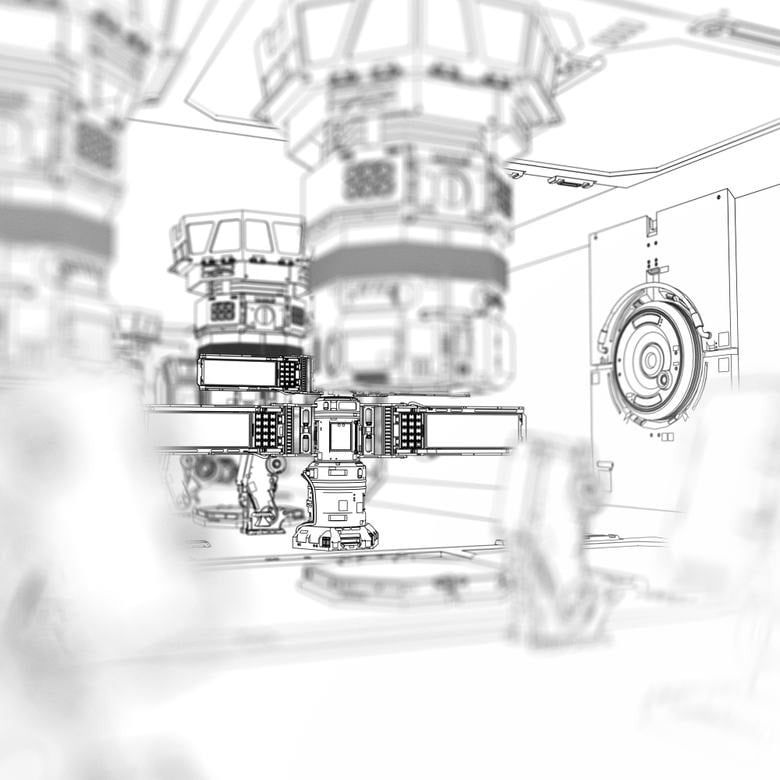
Anime and sketch rendering
Toon edge rendering is being re-factored for the Octane 2028 release cycle for optimal performance and months of user feedback and internal testing. The 2028 toon edge system now carries outlines through sharp and glossy reflections, refraction and camera depth of field, with configurable width, color, texture and stroke style, and better stability in animation.
Also on the Octane 2028.x Roadmap:
New Octane X for iPad, iPhone Duo and Vision Pro:
Octane X has been rebuilt from the ground up to bring the full macOS Octane X experience to iPad, Vision Pro (and soon iPhone Duo), with desktop-class GPU rendering and a touch-first workflow built for all Apple Silicon (M4+ / A19+). Create, edit and render complete scenes without a node graph, add AOVs on the fly and render full animations on all Apple device form factors.
Subscribe to OctaneStudio+ today to take advantage of the most powerful suite of Octane software and services we’ve ever released, with €50 in OTOY Studio credits for neural and cloud rendering workflows.
About OTOY Inc.
OTOY Inc. is the definitive cloud graphics company, pioneering technology that is redefining content creation and delivery for media and entertainment organizations around the world. OTOY’s Academy Award®-winning technology is used by leading visual effects studios, artists, animators, designers, architects, and engineers, providing unprecedented creative freedom, new levels of realism, and new economics in content creation and distribution powered by the cloud. For more information, visit www.otoy.com.
Additional Resources: